Docs-as-code site for a public API

Read the live docs

Problem
The Open Library API is free and useful, but its docs are scattered, so a new developer has to piece together how to make a first call.
What I built
An unofficial docs site: a quickstart, five task guides, and a hand-written OpenAPI reference. Every code sample was run against the live API and shows real output.
Result
One command checks the whole site: style rules, the spec against saved real responses, the build, and every link. The docs are tested like code.
A closer look

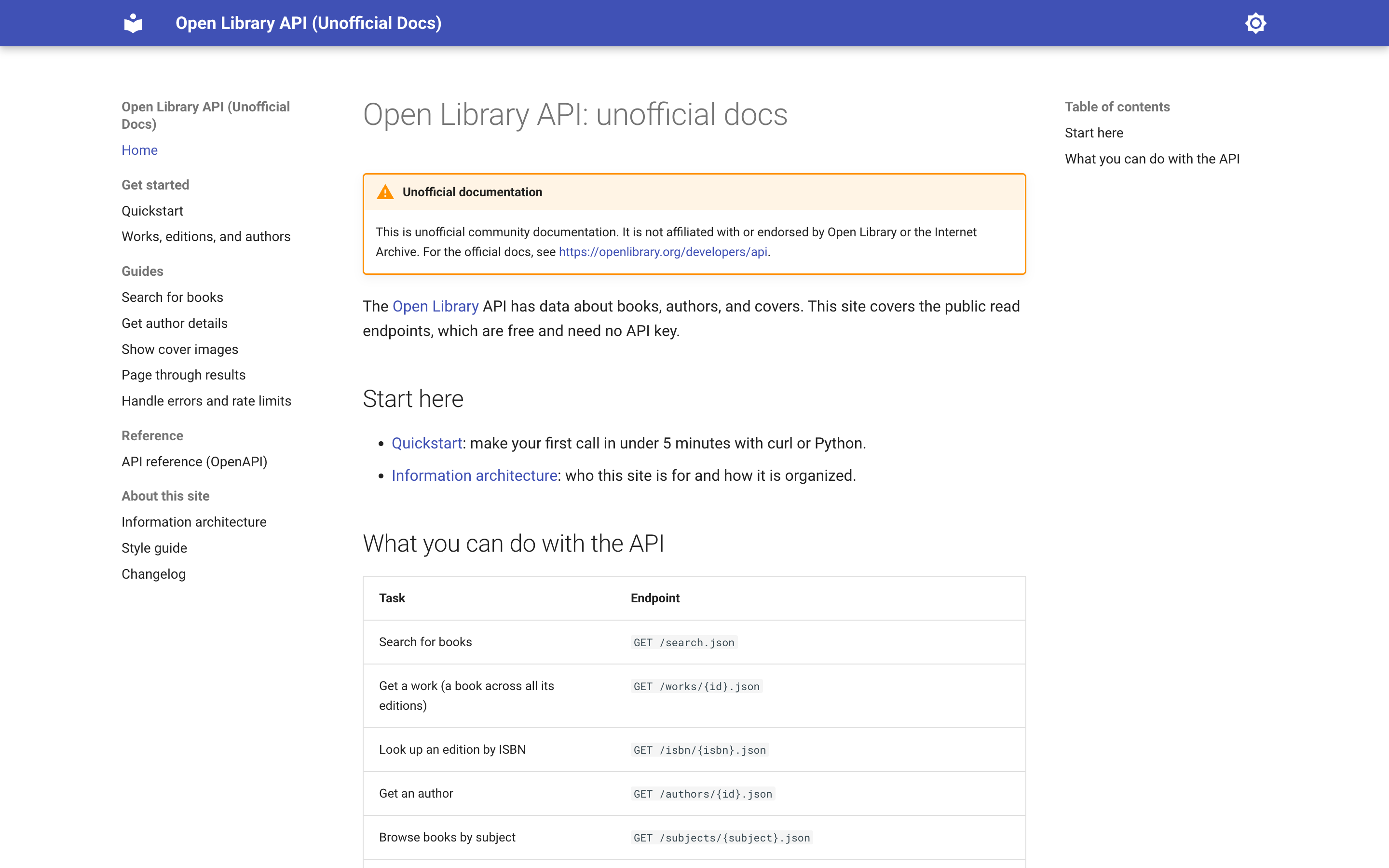
Home page of the unofficial Open Library API docs, with a warning that the docs are unofficial, a Start here list and a table of tasks and endpoints.
The home page: an unofficial-docs notice first, then where to start and what each endpoint does.
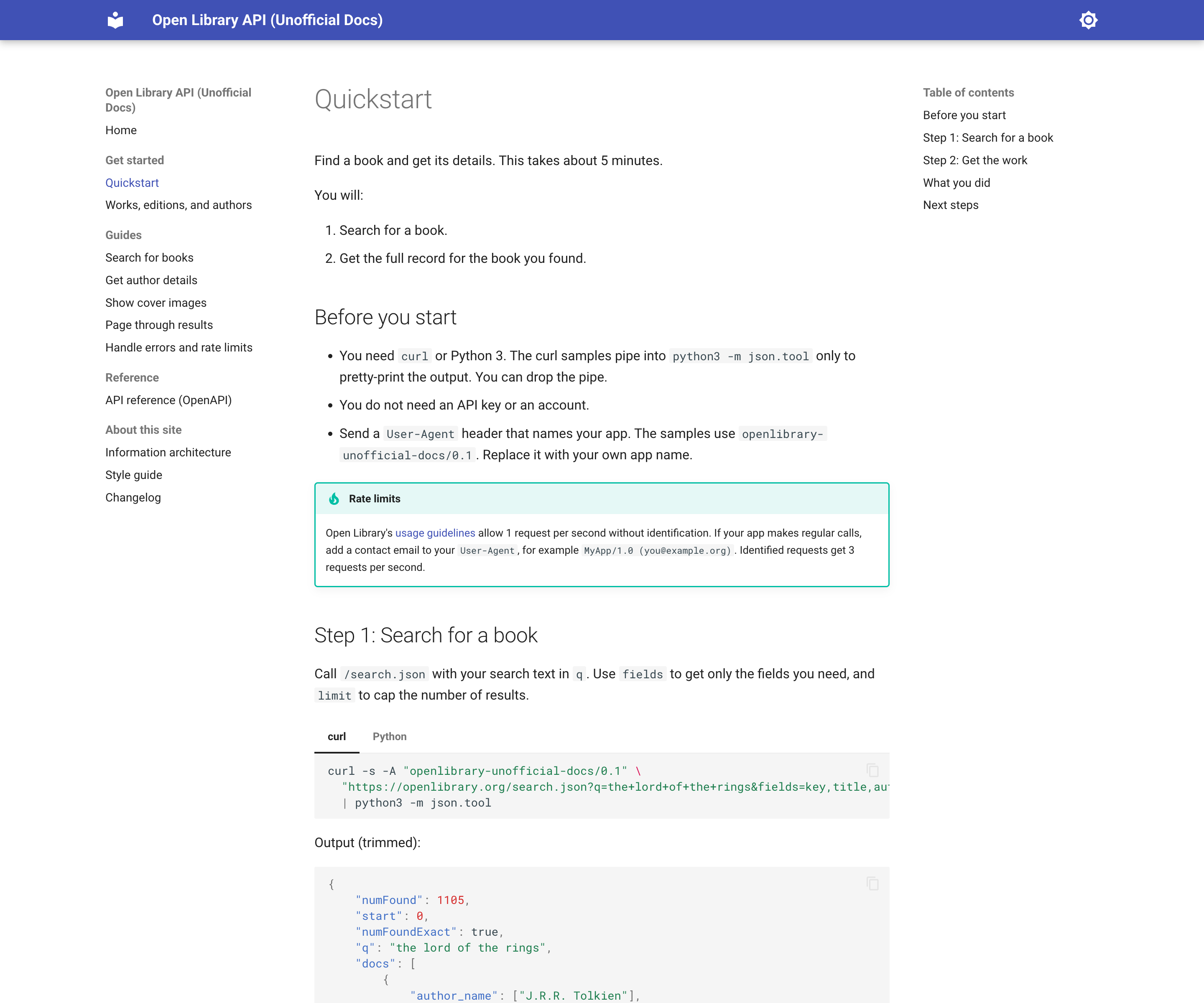
Quickstart page with prerequisites, a rate limits note, and a curl command followed by its JSON output.
The quickstart: a first search call in curl or Python, with the real response underneath.
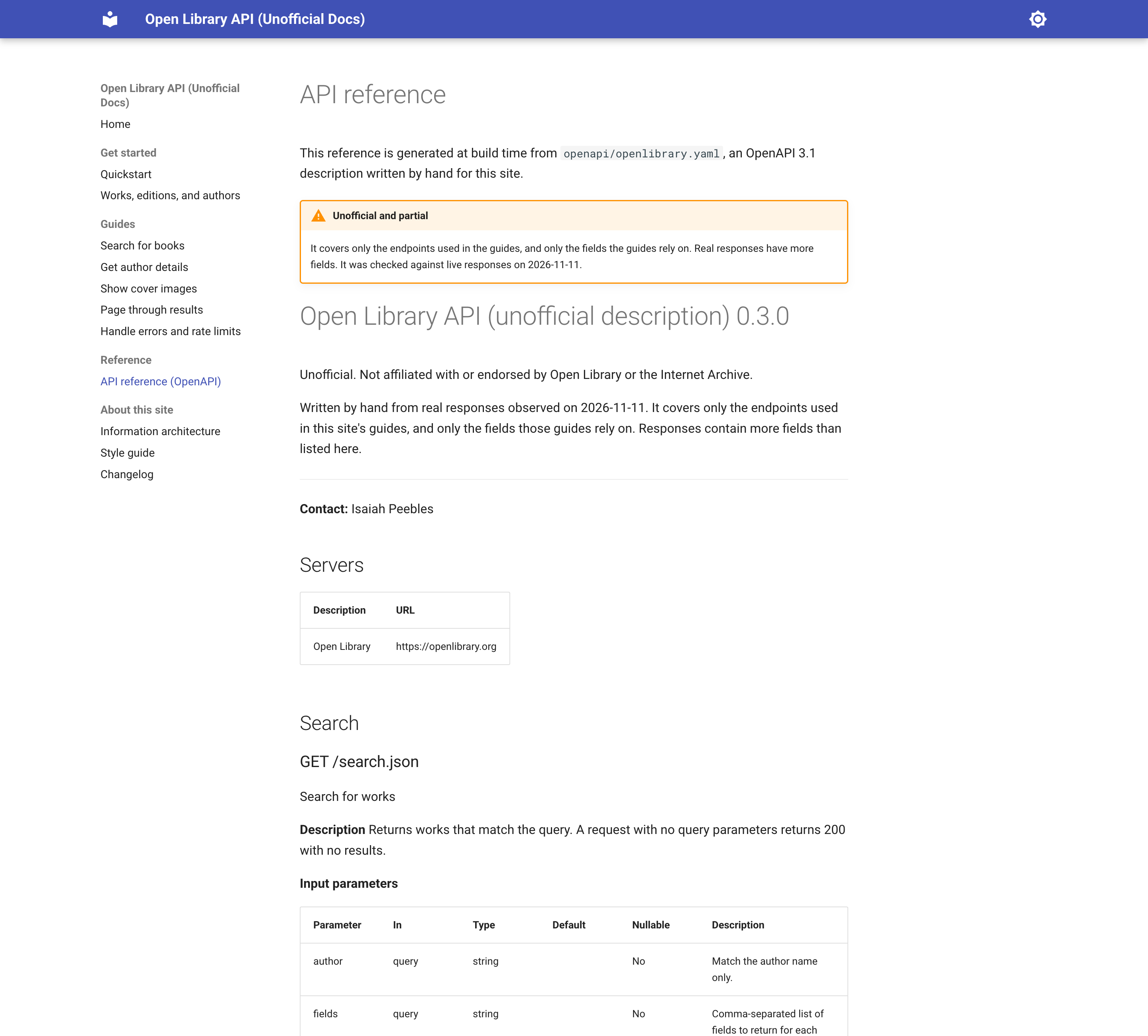
API reference page with a note that it is unofficial and partial, a servers table, and the parameters of the search endpoint.
The API reference, built from an OpenAPI 3.1 description written by hand.
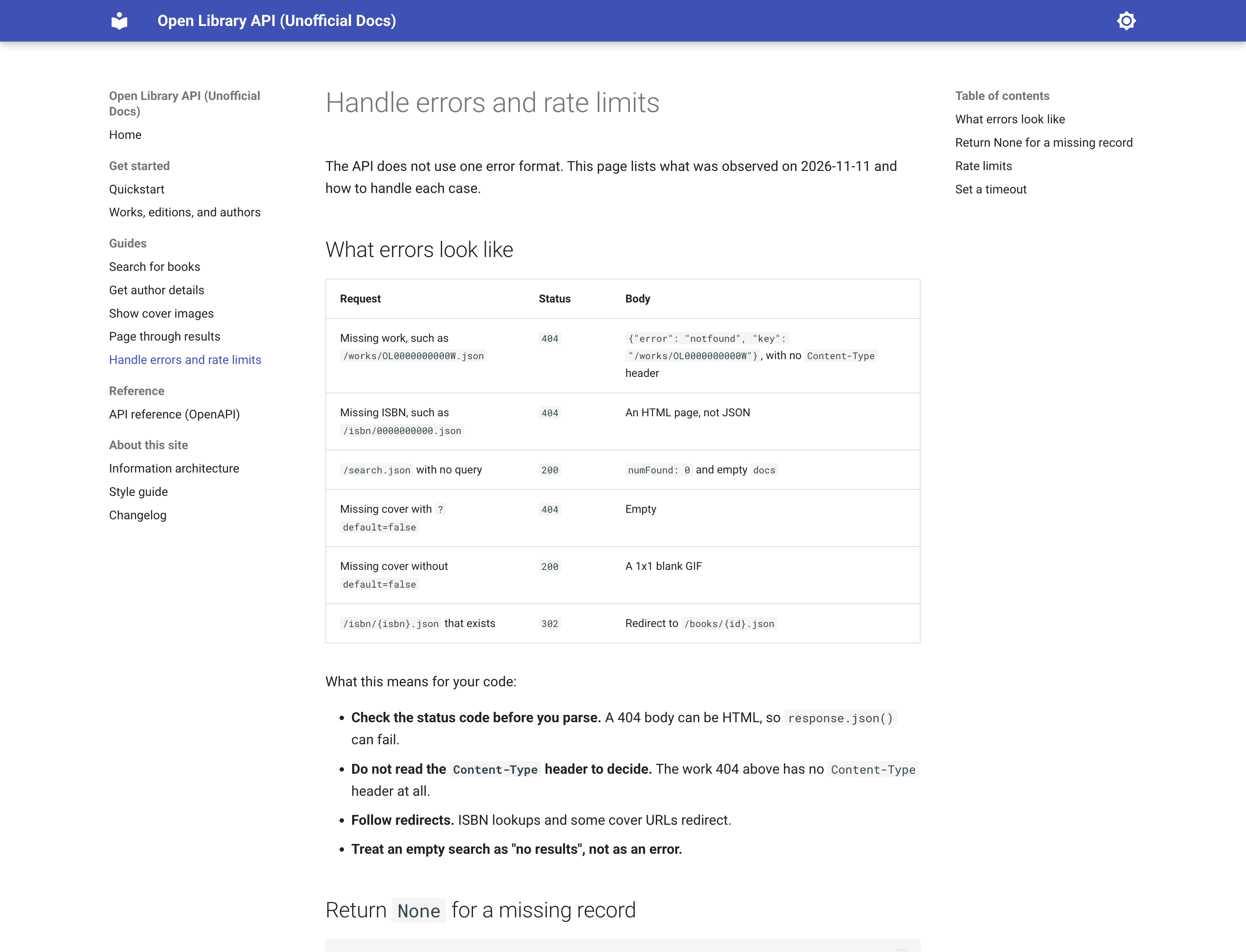
Errors guide with a table of requests, the status code each returned and the response body, followed by advice for handling them.
The errors guide lists what the API actually returned on the day it was tested.

Decisions

Which API
Open Library, over the USGS Earthquake API and PokéAPI. It is real and widely used, needs no key, and its official docs are thin and scattered.
OpenAPI description
Written by hand, not adapted from Open Library's own file. Writing one is the skill this project is meant to show.
Site generator
MkDocs Material, over Docusaurus, for its simple Python setup. It reaches end of life in May 2027. I stayed with it because its successor reads the same config, so moving later is cheap.

Limits

  • Unofficial. It is not affiliated with Open Library or the Internet Archive.
  • It covers only the public read endpoints that the guides use.
  • Responses were checked on 2026-11-11. The API can change after that.